


The Gaps We See on Home Policies (And How to Fix Them)
Most homeowners assume that if they have a home insurance policy in place, they’re covered.
And in many cases, they are — at least on paper.
But when we review policies, we often find small gaps that don’t show up until someone actually needs their coverage. These aren’t dramatic mistakes or obvious oversights. They’re usually the result of policies being set up years ago and never revisited as homes, costs, and carrier rules have changed.
Many of these gaps appear on otherwise solid home insurance coverage in California that simply hasn’t been reviewed in a while.

Coverage limits that haven’t kept up
One of the most common issues we see is coverage that hasn’t kept pace with reality.
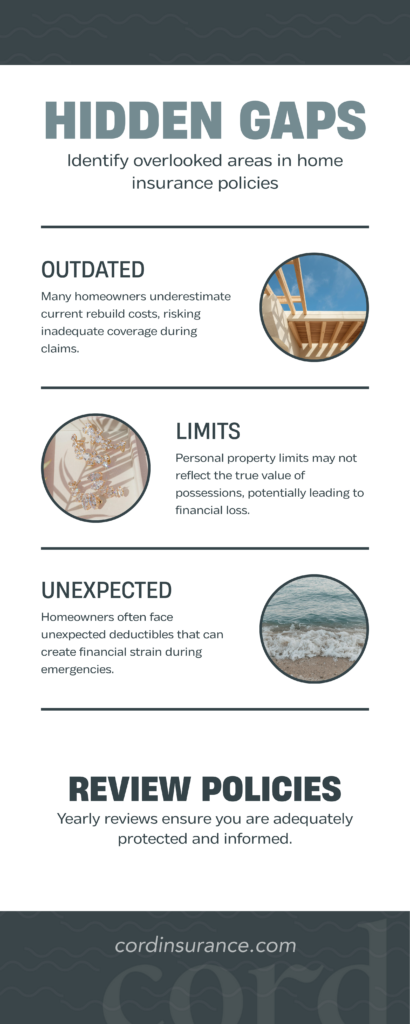
Construction costs, labor, and materials have all changed significantly in recent years. If a policy hasn’t been reviewed, the insured value of the home may no longer reflect what it would actually cost to rebuild today.
This often ties back to the same underwriting details that explain why insurance options can vary between similar homes, even at the same address.
Personal property that is assumed — but not specified
Another common gap shows up in personal property coverage.
Most policies include coverage for belongings, but certain items have limits unless they’re specifically scheduled. Jewelry, collectibles, art, and specialty items often fall into this category.
We regularly speak with homeowners who assume these items are fully covered, only to learn there are caps in place unless coverage is adjusted. This is usually an easy fix — but only if it’s identified ahead of time.
Deductibles that don’t match expectations
Deductibles are another area where expectations and reality don’t always line up.
Many homeowners are surprised to learn their policy includes different deductibles depending on the type of loss, especially for fire or wind-related events. In some cases, deductibles are percentage-based rather than flat dollar amounts.
These details often come to light late in the process, which is why home insurance non-renewals in California can feel sudden or confusing.
Loss of use that hasn’t been reviewed
Loss of use coverage helps cover additional living expenses if a home becomes uninhabitable after a covered loss.
This area is frequently overlooked, yet it matters more than people realize — especially given today’s rental costs and rebuilding timelines. If this coverage hasn’t been reviewed recently, it may no longer reflect realistic scenarios.
Gaps created by changes over time
Many coverage gaps don’t come from a single mistake. They develop slowly.
Home improvements, lifestyle changes, new purchases, or even how a home is used can all shift coverage needs. Without periodic reviews, policies can quietly fall out of alignment with real life.
This is especially common for homeowners who haven’t made changes recently but have simply lived in their home longer.
How a review helps
A policy review isn’t about rewriting everything or making changes for the sake of it.
It’s about confirming that coverage still fits the home, the homeowner, and the current market. Often, it’s a few small adjustments that make a meaningful difference and restore confidence.
When reviews happen proactively, they tend to feel calm and straightforward — not rushed or reactive.
Our approach
When we review home policies, we’re not looking for problems — we’re looking for clarity.
We walk through coverage line by line, explain what’s working well, point out areas that may need attention, and talk through options without pressure. Sometimes changes are needed. Sometimes reassurance is all that’s required.
Either way, the goal is the same: making sure there aren’t hidden gaps waiting to surprise you later.
A simple next step
If it’s been a while since your policy was reviewed — or if you’re unsure how certain parts of your coverage work — a check-in can go a long way.
You can schedule a policy review to make sure everything still fits your home and your life today.